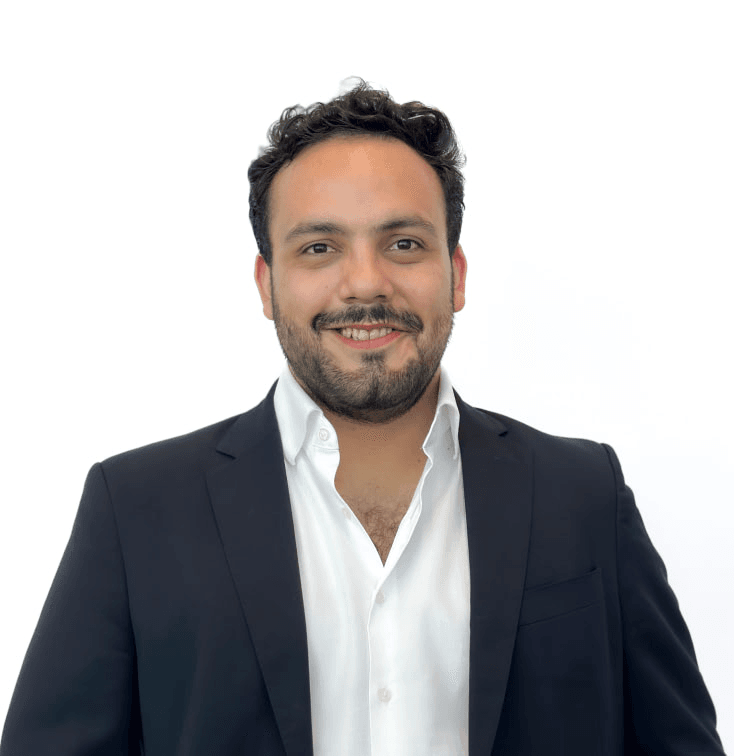

J.Pozuelo-Monfort, MSc candidate in economic development at LSE.

Flying from Barcelona to London I was able to glance at the Jersey Islands from the window seat of a low-cost airline. A two-hour flight that goes over the north of Spain and France before entering the Atlantic and further north England. Between France and England there are a few islands that form the well-known Jersey Islands. Jersey is one more fiscal haven in a world where tiny islands lost in the middle of the ocean usually maintain a regrettable condition that escapes from today’s understanding of fairness in a globalized world.
Jersey is from the sky far from being a haven, far from being a paradise. Jersey, as well as many other fiscal havens, has to justify its existence and plays an unfair role of facilitator of money laundering. Fiscal havens are sometimes tourist havens. Think of Bermuda. Think of the Virgin Islands. Those islands have an alternative industry to which its townspeople can devote their time and skills in order to earn a living. But think of Jersey, in the middle of the ocean, surrounded by water, with no easy access to mainland England and France. Think of Jersey’s citizens, their occupation. It is not touristic. It is barely agricultural. Oh well, for god’s sake there are fiscal havens in this world, that are job creators and wealth generators for tiny islands lost in the middle of the ocean, surrounded by water.
Fiscal paradises might enable the creation of jobs and wealth in tiny islands, but in exchange for what? In exchange for serious and severe collateral damage to countries in the first and third world. Serious and severe collateral damage because the first world loses taxation revenues because fiscal havens channel out funds from the better off of the society. Serious and severe collateral damange because third world’s leaders have oftentimes laundered their country’s money to secret bank accounts in fiscal havens.
Think of a professional killer that earns his or her living getting rid of undesired individuals. He or she might earn a living. Oh well, for god’s sake there are still professions in this world for everyone. The professional killer might only know how to kill. Thanks to his killings he is able to bring money home and raise his kids. But then think of the proud parents of children he or she gets rid of. What about them? What about their kids that will not be able to be raised appropriately?
Today’s world is justifying a financial architecture that only makes sense for a few better off. For a few inhabitants of tiny islands that might otherwise have to do something else, that might otherwise have to move to mainland and get to work in a tougher industry. But that’s the case for a majority of the population. And we should not sustain a few when it does so much harm to so many.
Let’s not only look at the maximization of economic profit. Let’s look at the maximization of social capital. The world’s financial architecture may then have potential for change.
Archive for May/2007
May
The irrationality of fiscal havens
Written on May 30, 2007 by Max Oliva in Development
May
América Latina: cambio climático y convergencia real
Written on May 29, 2007 by Javier Carrillo in Environment

Dr. Javier Carrillo Hermosilla, Executive Director of the Centre for Eco-Intelligent Management
A lo largo de los últimos años se ha consolidado el consenso entre los científicos, los políticos, los empresarios, y la sociedad en su conjunto, con respecto al hecho de que la actividad industrial ha contribuido significativamente al principal de los problemas medioambientales en nuestro planeta, el calentamiento global. Como es bien sabido, este fenómeno amenaza con aumentar la intensidad y variabilidad de los patrones climáticos a los que estamos acostumbrados, incrementando la frecuencia de los potenciales desastres naturales. De acuerdo con el segundo informe del IPPC (Panel Intergubernamental de Cambio Climático de Naciones Unidas), en América Latina se extremarán las sequías en las zonas con menos lluvias así como las precipitaciones en las zonas más húmedas. Los glaciares desaparecerán y los recursos hídricos disminuirán entre el 10% y el 30% en regiones de latitudes medias y en el trópico húmedo. Como consecuencia, se estima que entre 60 y 150 millones de personas tendrán un difícil acceso al agua potable y que las condiciones higiénicas empeorarán, favoreciendo el desarrollo de enfermedades como el dengue o la malaria. Del mismo modo, se encuentran amenazadas numerosas especies animales y vegetales, incluyendo la propia supervivencia del Amazonas. En cuanto a las consecuencias estrictamente económicas (aunque es fácil entender que los anteriores desastres naturales y humanos también pasarán su factura), la disminución en la disponibilidad de agua afectará seriamente a la generación eléctrica, conducirá a la salinización y desertificación de las tierras agrícolas, y reducirá la productividad del ganado. Evidentemente, todo lo anterior tendrá consecuencias adversas en la seguridad alimentaria de la región. Además del sector agrícola, también se verán afectadas otras actividades económicas basadas en un clima estable y predecible, como es el caso del turismo o los seguros.
Las naciones industrializadas, en las que habita el 20% de la población mundial, son responsables del 60% de las actuales emisiones globales de CO2. Según un informe de la oficina regional de América Latina y el Caribe del PNUMA (Programa de Naciones Unidas para el Medio Ambiente), la contribución de América Latina a las emisiones globales fue tan sólo del 7% en el año 2000 y se espera que para el 2050 genere el 9%. Si bien la responsabilidad directa de la región a través de su actividad industrial y económica no parece muy alta, sí está en sus manos frenar la acelerada destrucción de sus extensos bosques y selvas, que actúan como sumideros globales de CO2 cuando permanecen vivos y liberan grandes cantidades cuando son destruidos. El último informe sobre la situación de los bosques en el mundo divulgado por la FAO (Organización de Naciones Unidas para la Agricultura y la Alimentación) constata que entre 1999 y 2005 se perdieron 64 millones de hectáreas boscosas en América Latina y el Caribe, principalmente como resultado de la conversión de los bosques en tierras agrícolas. Evidentemente, resulta necesario invertir esta tendencia.
May
(Un) bound Nightmare, (un) bound hell
Written on May 29, 2007 by Max Oliva in Development
J.Pozuelo-Monfort, MSc candidate in economic development at LSE.

A world in which over half of its population faces a daily threat to their lives, is a world of nightmare. A world in which over half of its population would risk its life for a better opportunity is a world of hell.
A world of nightmare, unbound nightmare. A world of hell, unbound hell.
Ours is a world of bound nightmare, of bound hell. Ours is a world in which we can control, in which we have control of pain and despair, of hunger and thirst. Ours is a society of rule and law, in which bad conduct is prosecuted and punished.
Put yourself in a situation of extreme pain or despair, at least momentarily. Experience what an instant of unbound nightmare and hell might be. And then try to imagine what it may be like to live in such situation every single moment of your entire life. Approach a noisy train, get in a crowded underground carriage, spend an hour outside under a freezing cold or an extreme heat. After all you can put a limit to your pain, to your despair. Others simply cannot. Others simply cannot choose and have to withstand situations we would see as irrational, unbearable and completely ruled out in a society we claim to be modern.
Put yourself in a situation of extreme pain or despair, at least momentarily. Stop eating, stop drinking, stop loving for a single day. Stop smoking, stop drinking coffee, suffer your own despair for a day. Learn to feel like less fortunate others do. And then find an incentive to fight for the worse off of the society, and then find an incentive to believe everyone deserves an opportunity. Do not take what we have for granted. Do not take the society we live in for granted. Do not think everyone has the opportunity to improve their living.
We are at war. We are at war against hunger at poverty. It is a different war. It is a world war fought with different weapons, weapons of mass persuasion. A constructive debate that needs to be necessarily brought to society in which unheard of mechanisms should definitively be taken into account. We cannot afford to stay aside a regrettable reality that has a definite solution. We cannot remain eyewitnesses of an international conflict that causes more deaths than any other conflict of our time. The world deserves better.
Demand that your political leaders incorporate international hunger and poverty into their agendas. Mobilize locally. Be heard globally.
May
Talento y Responsabilidad Corporativa
Written on May 28, 2007 by Max Oliva in Corporate Responsibility, Development, Diversity, Jobs
Max Oliva, Director Asociado, Social Impact Management

El talento y la responsabilidad corporativa ha sido el tema de la V Tribuna de PwC & IE, la cual ha tenido lugar el día de hoy (28 de Mayo) y en la cual han participado como invitados:
• Carlos Viladrich; Director Recursos Humanos ADECCO España; Adecco Human Capital Solutions Director
• Fernando Muñoz Berzosa, Subdirector General de Gestión de RR.HH BANESTO
• Miguel García Mosquera; Director de Compensación, Selección y Formación INDITEX
• Coral González; Directora de Recursos Humanos. SANITAS
• Alberto Durán; Presidente de la Fundación ONCE
• Mario Lara; Socio Responsable de Human Capital PwC
Y como Moderadores:
• Profesor Joaquín Garralda; Director del Centro PwC – IE de Responsabilidad Corporativa
• D. Enrique Fernández Miranda; Director de la Fundación PwC
Algunas de las intervenciones se resumen en las siguientes líneas, mismas que serán publicadas en Expansión en breve.
La retención tiene que ser con compromiso para que sea productivo. Lo que buscamos es no solo un compromiso racional, sino emocional que muchas veces es la clave en la retención de las personas.
Coral González de Sanitas, mencionó que la Responsabilidad Corporativa es una ventaja competitiva a la hora de atraer talento. El tener la capacidad de atraer y retener talento en mercados tan competidos como Madrid y Barcelona es vital. El primer paso está relacionado con la imagen de la compañía; posteriormente, los elementos de conciliación juegan un papel muy a favor.
Para incrementar la retención, contamos con programas de voluntarios y de diversidad, mismos que hacen que el empleado descubra que su empresa tiene un compromiso que va más allá de generar beneficios.
Miguel García de Inditex por su parte comentó: “en nuestro caso, atraemos al talento por el orgullo de pertenecer a una empresa multinacional española. El grado de reconocimiento de Inditex fuera de España es apabullante. Es aquí que el talento con alto potencial pone atención en nuestra responsabilidad corporativa, prestando por ejemplo, especial atención a como tratamos a nuestros proveedores y usando ésta como razón fundamental para ir a nuestras convocatorias, y no por nuestros resultados financieros, beneficios, o nuestras más de 3,000 tiendas en el mundo.”
May
The Debt Threat
Written on May 28, 2007 by Max Oliva in Development
J.Pozuelo-Monfort, MSc candidate in economic development at LSE.

Noorena Hertz does it again. In a book written before she wrote The Silent Takeover she exposes how developing countries have become heavily indebted over the past few decades, particularly since many of them earned a deserved independence from their former colonies.
Dr Hertz starts with a superb opening first chapter in which she details how Bono was able to persuade the political class of the G8 countries and particular that of the United States, that the debt burden on the poorest countries of the world was not only unfair and unethical, but had been accumulated thanks to the lax lending of western banks.

The book continues to give additional facts on how some of the debt has been used by despots and dictators in developing countries to undertake their personal vision.
The book also gives a relatively unprecise explanation of the role of the credit rating agencies, that usually are much more quantitative than qualitative and do not necessarily take capricious decisions seeking to increase the negative impact of a financial crisis in the developing world.
There is in the end more to blame on the current financial architecture of the world, allowed by industralized nations, and the imposed neoliberal economic policies on behalf of the World Bank and the International Monetary Fund, than on the side of the Rating Agencies.
Dr Hertz finalizes her piece providing further thinking as to how the debt burden ought to be forgiven, and how to incentivate developing countries to use the so-liberated funds appropriately, far away from using them for other reasons different than those of reducing poverty through the promotion of free access to education and better healthcare provision.
May
Ecosystems as public utilities, an emerging market business
Written on May 24, 2007 by Max Oliva in Corporate Responsibility, Development, Environment

Waya Quiviger, Director of Special Projects, Social Impact Management
IE Business School
John Forgach has been coming to IE for the past four years and every year his session is the most popular Global Affairs lecture. This is partly because the urgency of addressing climate change and the incredible opportunity this represents for business make front page news almost daily. The other reason is John Forgach himself. His thought-provoking and inspiring talk will compel even the most indifferent audience.

The International MBA students were absorbed by Mr. Forgach’s presentation: mixing a cautionary tale about the dire state of our planet and the red-hot business opportunity this actually represents. According to Forgach the Internet 2.0 wave is tapering off while the “green revolution” is only beginning. Indeed, in his words : “the environment represents the largest business opportunity in the years to come given that all the “green commodities” are currently massively undervalued”. Mr. Forgach recommended carbon trading, wind farms, solar farms, renewable energies, timber, carbon sequestration, biodiversity conservation, water quality as business opportunities. The only one he seemed to oppose was ethanol as an alternate source of energy.
Mr. Forgach is currently chairman of ForestRe, a large re-insurer in the timber business and Equator Environmental a carbon and green commodities trading company. His pet project as he calls it is a $300 million venture with the Panama Canal where his company will 1) plant and sell timber around the canal; 2) sell the clean water in the canal; 3) sell the carbon credits he earns through the timber plantation. In his opinion, this is the best way the Panama Canal has to be profitable until it becomes obsolete once large companies start using the polar routes between Asia and Europe in 15 years. These routes will be open only because of climate change and the fact that the polar ice caps are now melting at an alarming rate.
Students had many questions for John, including whether he truly believed the environment was the most profitable business and what prospects for our planet were. He answered candidly that there may be more profitable businesses but none that combined feeling good about yourself, helping the planet AND making money. Regarding prospects for successfully combating climate change, his answer was rather bleak: at this point it was more a question of slowing down the irreversible. Mr. Forgach concluded his talk with a list of business tips for aspiring entrepreneurs in the green business, the most important ones being: “Good management is more important than good ideas; don’t fall in love with your project; show the bad apples in your business plan; show the value proposition; don’t think you will save the planet!”
May
The Triple E
Written on May 23, 2007 by Max Oliva in Corporate Governance, Corporate Responsibility, Development, Philanthropy, Social Entrepreneurship
J.Pozuelo-Monfort, MSc candidate in economic development at LSE.

Extreme, External, Eternal
Published at elPeriódico.cat (In Catalan).
The three words that the debt and the poverty of the developing world have in common.
Extreme because debt and poverty have reached levels that are so regretful, so inhumane, and so beyond the normal levels, that need to lead to serious thinking in the industrialized world as to when and why this has happened.
External because the current levels of debt and poverty have been fostered by external causes. Their root might be in the developing world itself, but oftentimes not in its citizens, but in its corrupt leaders that once upon a time where given a wildcard to borrow as much money as they felt they needed to undertake their personal vision, far away from being backed and supported by their own citizens.
Eternal because debt and poverty risk to be long-time companions of a world that heads off in the wrong direction. An unequal world that operates according to the rules of a minority that is powerful and wealthy. An unequal world that operates according to the rules of a select club of nation-states unable to move forward and face the real challenges of the XXI century.
The Triple E. A challenging trilemma. One wonders who in this world of ours is responsible and can be accountable for a change. We are reaching a point in which the developing world will cry out loud and say it is enough. It is enough. We need public administrators ready to deliver. We need public administrators eager and willing to deliver. A huge responsibility lies on our shoulders as citizens of a democratic world whose leaders are not being consecuent and coherent.
The Triple E. Let’s get to work.
May
Eternal Poverty
Written on May 22, 2007 by Max Oliva in Development
J.Pozuelo-Monfort, MSc candidate in economic development at LSE.

We are used to eternal concepts. Some talk about eternal life. Others deserve life in prison which is equivalent to eternal cautivery. Eternity is, after all, an abstract concept very hard to imagine because the human being is finite and oftentimes incapable of grasping the idea of infinite.
Unless it has a positive connotation, eternity is an idea nobody likes. Imagine an eternity in hell next to the devil and surrounded by burning flames that bother you constantly. Think of your mother in law, think of a small elevator, imagine eternity with your mother in law in a small elevator. Definitely nobody likes eternity when it does not have a positive connotation.
Eternal poverty and misery is what most of the Human Kind can only dream of when they are born. In this scenario it may not be worth to be born. Eternal poverty and misery is a condition most of the Human Kind simply cannot escape because even if today’s society were able to turn the current situation around, it simply seems that the first world is too scared to make substantial changes that allow for a massive redistribution matching the Marshall Plan of the post war world of the late 1940s.
Nobody deserves to be born and immediately condemned to eternal poverty. It is not fair, and fairness is a concept that is very well liked in the western world. We like fairness. We encourage fairness. We promote fairness. Think of fair play in football. Think of antitrust in economics. Think of good manners in politics. Think of the international criminal court to judge international outlaws. You name it. The western world loves fairness.
Fairness at a global scale is only possible today. Fairness at a global scale should and would lead to global justice. And only global justice will let the thousands of young men and women born each day escape eternal poverty and misery, eternal hunger and thirst. And when I think of eternal hunger and thirst, I can only think of hell on Earth, and that, ladies and gentleman, cannot co-exist with the modern world of the XXI century.
May
El Proyecto Alcatraz
Written on May 21, 2007 by Max Oliva in Corporate Responsibility

El Club de Venezolanos del IE y el Net Impact Club les invita a participar en la presentación que ofrecerá el empresario y emprendedor social Alberto Vollmer, Presidente de la empresa Ron Santa Teresa, acerca de uno de los proyectos de responsabilidad social más exitosos de Venezuela: El Proyecto Alcatraz.
Que es Alcatraz? Es una ONG que se encarga de reclutar a jóvenes con serios problemas de conducta, impartiéndoles educación en valores, trabajo comunitario y asistencia psicológica para luego reinsertarlos en la sociedad y de esta forma contribuir a solventar dos grandes problemas: delincuencia y desempleo.

Entre los logros de este proyecto a nivel mundial se encuentran:
• Ser seleccionado como caso modelo por la Red de Conocimiento para el Emprendimiento Social (Social Enterprise Knowledge Network) liderado por el profesor James Austin de la Universidad de Harvard
• Segundo lugar a nivel mundial en la Conferencia sobre Juventud, Paz y Desarrollo en Sarajevo, Bosnia, organizada por el Banco Mundial. (Septiembre 2004)
• Contribuir con la drástica disminución de hasta un 40% de los índices delictivos en la zona de alcance del proyecto
• Haber participado por dos años consecutivos como equipo en el Campeonato Internacional de Rugby “7 A-Side”
Si deseas conocer más acerca del Proyecto Alcatraz y acerca de la buena gestión de la empresa privada en Venezuela asiste a la presentación que tendrá lugar el martes 29 de mayo desde las 4:30 hasta a las 6:30 pm en el Aula Magna. La charla será impartida en español.
Para reservar tu lugar, haz click aqui.
May
Another word is possible
Written on May 17, 2007 by Max Oliva in Corporate Responsibility, Development, Social Entrepreneurship
J.Pozuelo-Monfort, MSc candidate in economic development at LSE.

The universe of outcomes is an unexplored series of potential future scenarios, some of which are more likely to materialize than others. More likely than others because in the minds of the everyday people, some futures are more readily imaginable than others. More likely than others because a majority of citizens are unaware of thinking beyond the usual, unable to think beyond what is standard and understood by default.
Tomorrow is oftentimes a projection of today. Tomorrow is oftentimes a continuation of what we live, experience and are witnesses of today. But even though there are expectations about what tomorrow will bring, even though there are forecasts about what tomorrow will be, no one, not even the more accurate weather forecaster, not even the better stock analyst, is able to guarantee what tomorrow will bring.
The universe of outcomes is an unexplored series of potential future scenarios. Future scenarios that may or may not involve imagination, creativity, the ability to think beyond the ordinary, the ability to suggest alternatives to today’s problems. The universe of outcomes must not be controlled by the better off.
Imagine a tomorrow in which everything is possible. Forget about today, forget about what history has brought. Believe in a tomorrow in which everything is possible. Think beyond the ordinary. Include the universe of outcomes and assume each of them is equally likely to happen.
Another world is possible. Another word is possible. It is never late to dream with a better world. It is never late to think that the fate of the Human Kind is not predetermined. The ability of the Human Kind to reverse all the harm caused by centuries of exploitation and abuse, caused by a growing gap between the rich and the poor, the ability of the Human Kind stands out as the centrepiece of a theatre play that started long ago and has, still, not reached the end of civilization.


Recent Comments